Where AI and human performance meet. America’s next revolution is happening now in Dolton, IL.
No technology has more potential to reshape small-town economies than AI labs. But most are built in isolation, optimized for training models rather than transforming places. Players Park was designed to change that.
Originally published January 2021. Last updated June 2025.
Just 15 minutes south of downtown Chicago — abandoned industrial land in Dolton, IL, slated for a Sports Technology Research District powered by a 300 MW AI factory.
by D. Frank White
Founder of Players Technologies.
AI performance is doubling every 6 months. America’s infrastructure isn’t. America is running out of land and power to build data centers. Without new models for AI infrastructure, we risk losing economic competitiveness—from productivity growth to national security.
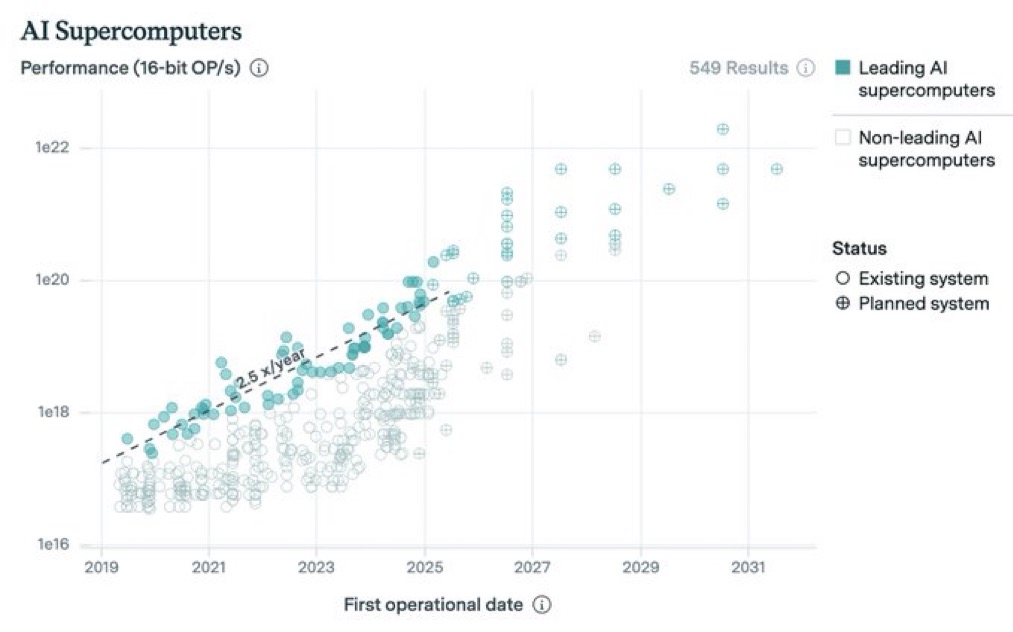
AI compute power is scaling exponentially. Performance has doubled every 6 months on average, with leading AI systems growing at a rate of 2.5x per year. Players Park is built for this trajectory: high-density compute, embedded testing, and civic-aligned infrastructure.
Just 15 minutes south of Google’s Chicago HQ, Players Park—a new model for AI infrastructure—is being developed on land once left behind.
As the headquarters of Players Technologies, an AI lab startup pioneering athlete-owned data systems, Players Park turns a local real estate liability into next-century asset, creating a unique district providing power for data center tenants and space for other AI labs to training local talent to supercharge American productivity from the ground up.
The Dolton site carries the weight of American industrial history, once part of the atomic bomb supply chain, then gifted back to the community for youth baseball. This land was later imagined as a community center, waterpark, and public golf course. These visions were born from a shared hope to create spaces that strengthen social ties and signal investment in the community’s future. While those plans never materialized, Players Park builds on that original intent and its industrial legacy by introducing private industry as a public partner to transform that hope into long-term economic vitality in the form of jobs creation, youth training, and safe public open space where residents can live, work, and play.
Players Park doesn’t replace community aspirations. It advances them, grounded in the principle that economic development is the foundation of community development, both of which are essential to stabilizing and growing Dolton’s economy for generations to come.
From Lab to District: How Players Park Turns Research Into Civic Infrastructure
What begins as AI research in high-performance environments becomes the foundation for civic district that improves everyday life. Wearables developed for athletes inform fall detection for the elderly. Smart fields built for player analytics double as urban sensing platforms for air quality and mobility. Real-time recovery protocols are adapted for workforce safety and rehabilitation. This research-to-infrastructure loop is embedded directly into the district—transforming athletic experimentation into applied, public-benefit technology. By integrating sensors, compute, and testing environments into the physical fabric of the park, Players Park becomes a living testbed for scalable, real-world solutions.
From District to Scalable AI Factory Towns
Each new Players Park district doesn’t just copy the original we’re building in Dolton. It builds on the regional competitive advantages, industrial history, and unique infrastructure to strengthen the nationwide network.
Before expansion, we look for the same foundational ingredients that made Dolton viable. These are the baseline conditions for any successful Players Park deployment:
- Within 30 to 90 minutes of a major metro
- Underutilized power and fiber capacity
- Available industrial-zoned land
- Civic leadership open to public-private partnership
- Regionally relevant workforce and mobility corridors
Today, Dolton. Tomorrow, neighboring Riverdale, IL with similar post-industrial zoning and civic need. Then East St. Louis located directly across the Mississippi River from downtown St. Louis. Next Birmingham, AL, a southern logistics hub with dormant industrial land. Buffalo, NY with its great civic university & compute corridor potential. Richmond, CA on the fringe of the SF Bay Area with industrial roots and port infrastructure. NYC adjacency Bridgeport, CT whose industrial base is declining but open to innovation.
- More districts = more compute
- More AI labs = more unique data sets
- More health use cases = more positive health outcomes
- More transportation corridors = stronger data center networking routes
- More public-private sites = more leverage with hardware suppliers and capital
- More local workers = a new AI-ready working class rooted in place
This is how Players Park scales into a national network of AI factory towns to deliver the infrastructure model required to keep America competitive in the age of artificial intelligence.
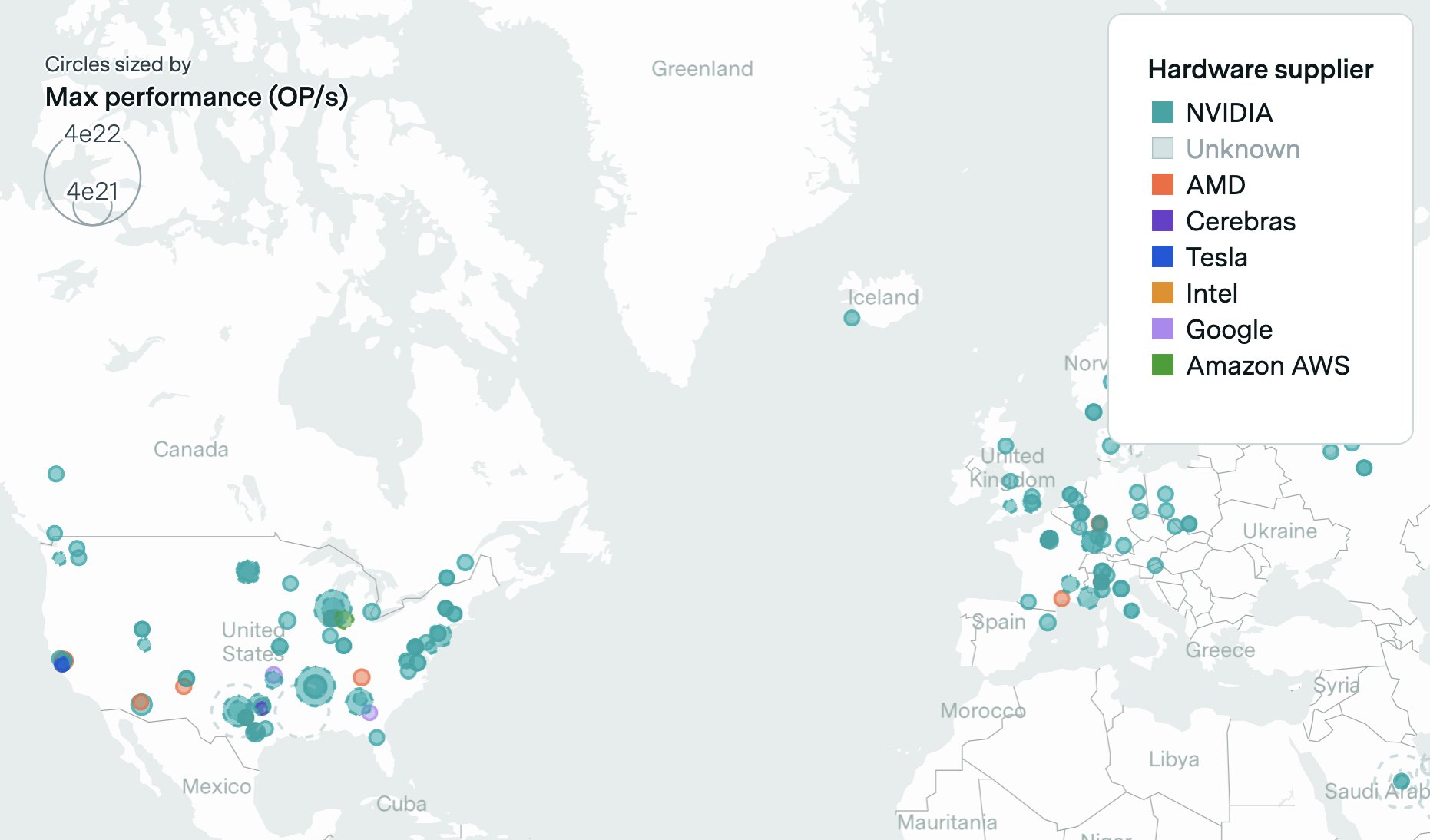
Players Park is strategically sited—embedded in one of the densest AI infrastructure corridors globally. The district connects directly to suppliers like NVIDIA, AMD, and AWS, positioning Players Park in Dolton, Illinois alongside elite global compute regions.
Why No One Else Is Doing This
No one else combines AI infrastructure, civic utility, and real-world testing because it requires crossing institutional boundaries that most entities aren’t built to navigate. Most AI infrastructure is built for computation, not civic utility. Enterprise data centers operate in isolation, rarely integrated with the towns where they reside. AI labs are still not recognized as economic development tools in most small towns, where community priorities often exclude infrastructure planning. In sports and performance, data is routinely extracted without meaningful ownership by those who generate it. Players Park addresses all of these gaps. It integrates sovereign data systems, real-time testing environments, and AI-ready infrastructure into a unified civic district. This model enables applied research, economic inclusion, and scalable productivity. At present, no public or private entity brings these components together at the district scale.
What it Takes to Launch a Nationwide Model for Civic Grade AI Infrastructure
Players Park must clear four critical thresholds to move forward: (1) site readiness and community alignment, (2) scalable infrastructure with guaranteed utility service, (3) a viable commercial and product model, and (4) financial and narrative credibility strong enough to attract committed capital. Each layer lowers execution risk and increases the probability of meeting Phase 1 objectives—defined as infrastructure activation, early development, and soft commercialization within 12 to 18 months.
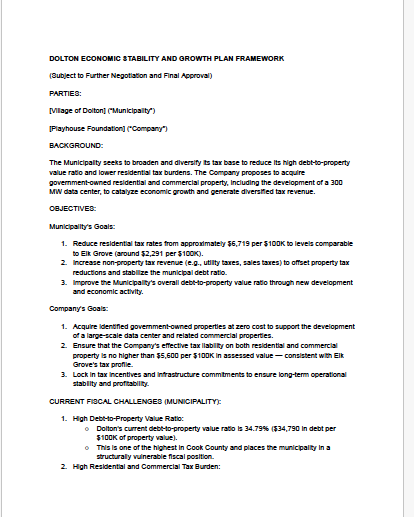
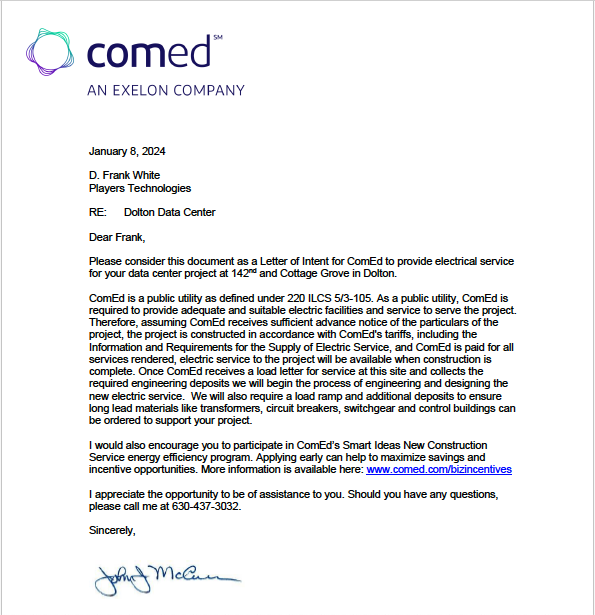
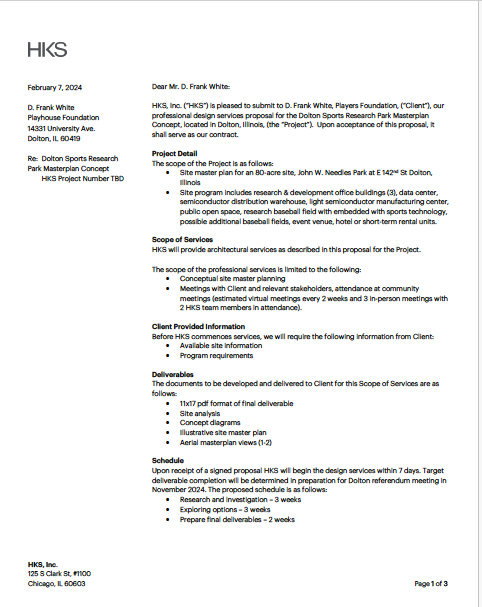
Those thresholds are no longer aspirational. Players Park Dolton was issued a letter of support signaling full public alignment. A 300MW will-serve letter confirms energy capacity. Players Technologies has granted intellectual property. A comprehensive master plan is underway with HKS, Inc. Philanthropic funding has been committed by the MLB Players Alliance. An institutional letter of approbation confirms pre-development readiness. The final layer is a finalized purchase agreement and preliminary permits to lock in equity and catalytic grant funding to initiate vertical construction and begin market-facing deployment.
February 8, 2025 — Players Park Board Discussion
Mayor Pro Tem and current Mayor of Dolton, Jason House, leads a critical discussion on the future of Players Park.
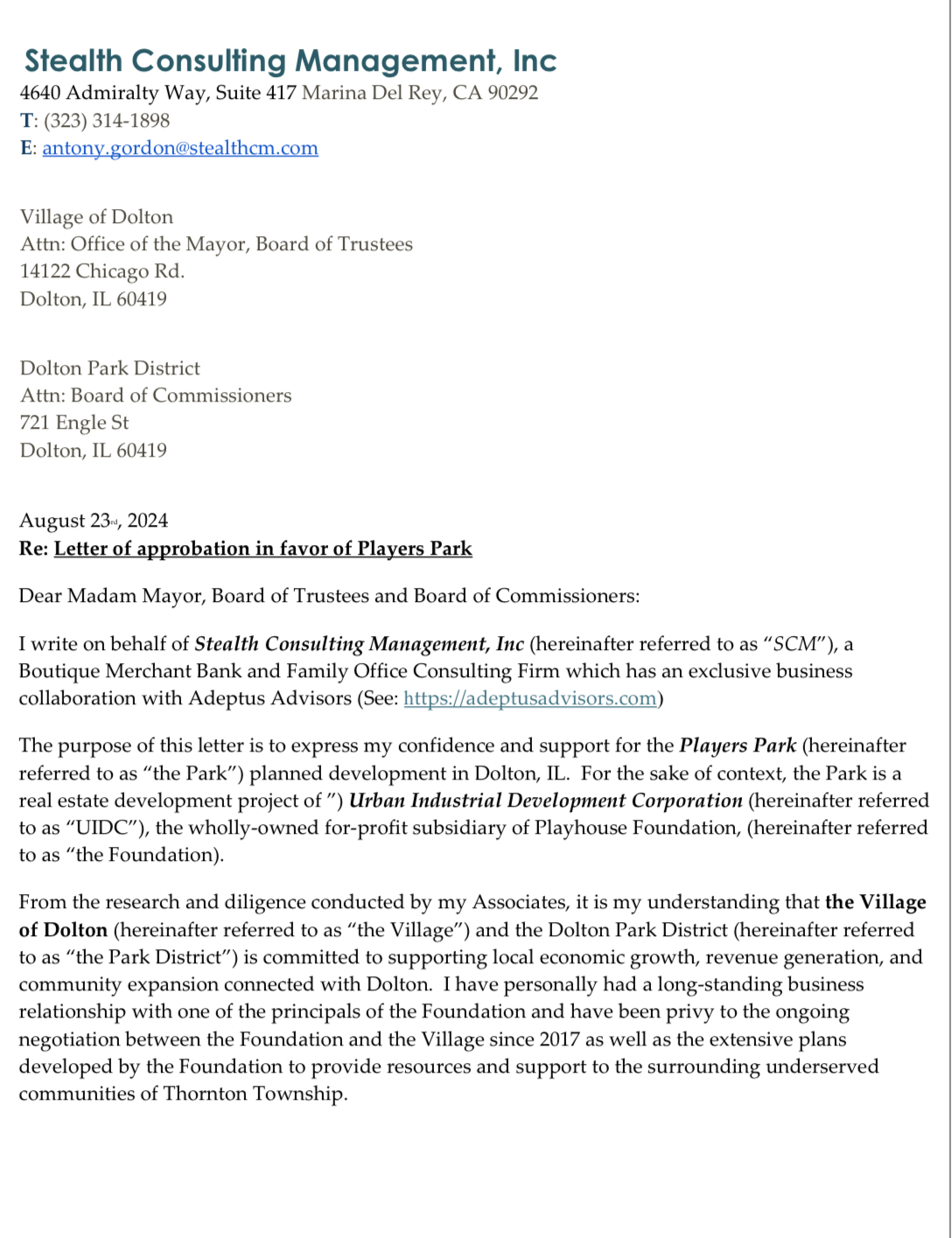
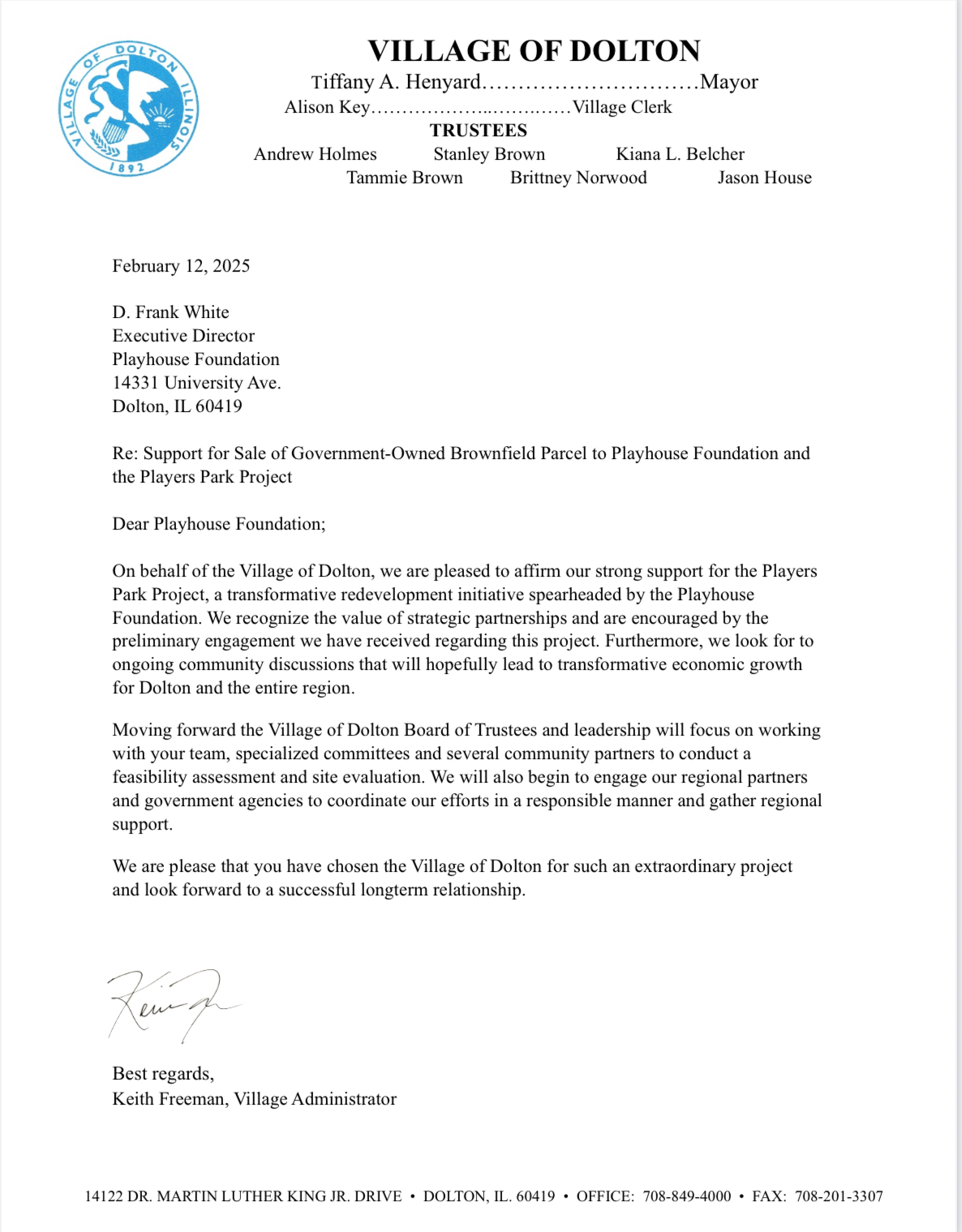
With these foundations secured, Players Park now carries a 60% probability of reaching Phase 1 outcomes within the next 12 to 18 months. The site is positioned to become a national model for AI infrastructure in overlooked growth markets—where data centers, research infrastructure, and long-term workforce productivity can converge.
Phase One Now Open: Back by Public Support and Opportunistic Returns
The final layer of Phase 1 is open to aligned capital partners. The Players Park capital stack is structured to receive both philanthropic and private investment—combining preferred equity, catalytic grant capital, and program-related investments into a unified, compliance-aligned framework.
Returns are modeled in the 17% to 21% IRR range based on current cost assumptions, lease structures, and exit cap rate sensitivities. These targets align with current benchmarks for digital infrastructure development while offering real upside tied to early-phase entry. Investors also benefit from early access to future development phases and locations.
With 85% Execution Risk Resolved, Capital is in Motion
This structure was developed in coordination with legal counsel to ensure that foundations, family offices, and institutional LPs can participate confidently. Sensitivities to cap rate, power pricing, tenancy velocity, and construction pacing have been fully modeled. We’ve stress-tested the project against both downside vacancy and exit scenarios to ensure real alignment with institutional expectations. To initiate review of terms and capital pathways, we invite you to connect directly with our structuring attorney, Brianna Gonzalez, Esq.