Where AI and human performance meet. America’s next revolution is happening now in Dolton, IL.
No technology has more potential to reshape small-town economies than AI labs. But most are built in isolation, optimized for training models rather than transforming places. Players Park was designed to change that.
Originally published January 2021. Last updated June 2025.
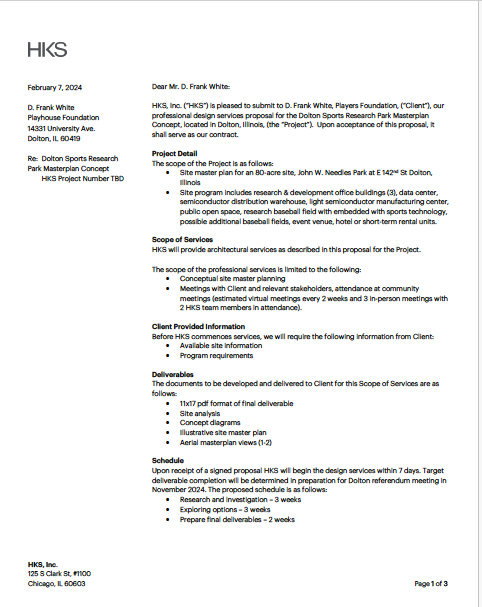
Just 15 minutes south of downtown Chicago — abandoned industrial land in Dolton, IL, slated for a Sports Technology Research District powered by a 300 MW AI factory.
by D. Frank White
Founder of Players Technologies.
Just 15 minutes south of Google’s Chicago headquarters, Players Park—a new model for AI infrastructure—is being developed on land once left behind.
As the headquarters of Players Technologies, an AI lab startup pioneering athlete-owned data systems, Players Park transforms a local real estate liability into a next-century asset. The district is designed to provide power for data center tenants, space for other AI labs, and pathways to train local talent—supercharging American productivity from the ground up.
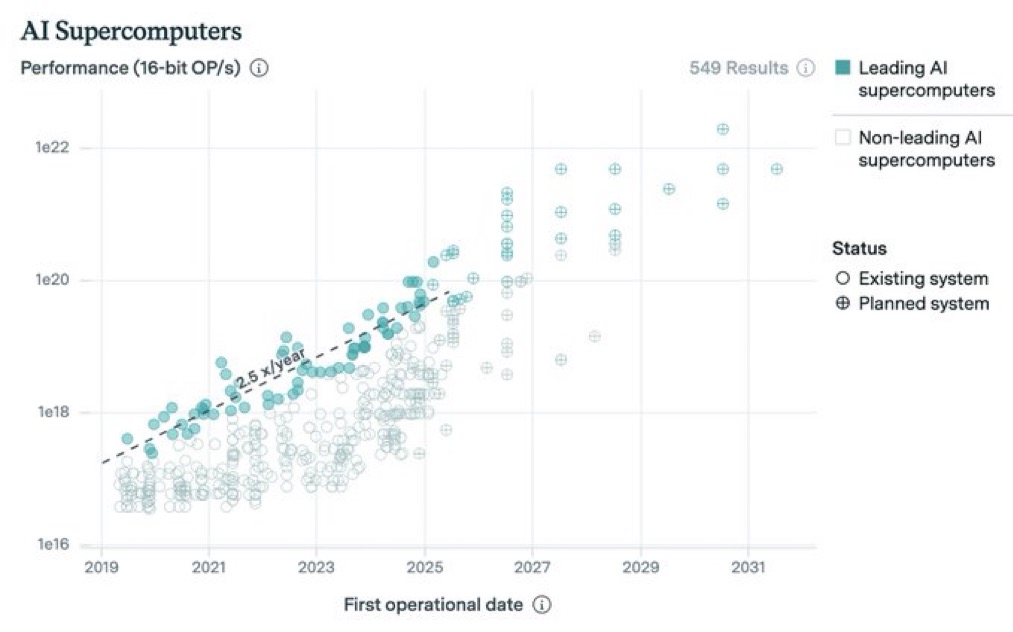
AI compute demand is growing at an extraordinary pace, with leading systems advancing far faster than traditional infrastructure can scale. This is the gap Players Park is designed to help address: creating space for high-density compute in strategically located communities like Dolton.
Our flagship site in Dolton, Illinois, bears the weight of American industrial history. It was once part of the atomic bomb supply chain, then later returned to the community for youth baseball. In the years that followed, the land was envisioned as a community center, waterpark, and public golf course. Those ideas reflected a shared hope: to create places that strengthen social ties and signal investment in the community’s future. While those plans never materialized, Players Park builds on that original intent and industrial legacy by introducing private industry as a public partner—one capable of turning that hope into long-term economic vitality through job creation, youth training, and safe public open space where residents can live, work, and play.
Players Park does not replace community aspirations. It advances them, grounded in the principle that economic development is the foundation of community development. Both are essential to stabilizing and growing Dolton’s economy for generations to come.
Why Places Like Dolton Matter in the Next Wave of AI Infrastructure
AI demand is growing faster than the physical infrastructure needed to support it. As compute needs rise, the challenge is no longer just building better models. It is finding enough power, land, and development-ready space in the right locations. Many urban cores have demand but limited room to scale. Many rural markets have land, but sit too far from the places where AI is most actively deployed and used. That leaves a critical gap in between.
Inner-ring suburbs like Dolton may be part of the answer. They often sit close to major cities, labor pools, and transportation networks, while still holding underused land and infrastructure potential that larger markets have overlooked. That combination creates a rare opportunity: to build the next layer of AI infrastructure in places that are both strategically located and economically in need of new productive assets.
Players Park is designed around that idea. It is not simply a plan to reuse land. It is a proposal to position Dolton as part of the physical backbone of the next economy—showing how communities with the right location, power potential, and development path can support AI growth while creating jobs, investment, and long-term local value.
From Lab to District: How Players Park Turns Research Into Everyday Value
At Players Park, ideas developed in the lab are meant to improve everyday life. Technology created for athletes can also help families, workers, and older adults. Tools used to track player performance can be adapted to detect falls, improve workplace safety, and support recovery. Smart fields built for sports can also help monitor air quality and traffic patterns. By combining research, technology, and real-world testing in one place, Players Park is designed to turn innovation into practical solutions that benefit the wider community.
From District to Scalable AI Factory Towns
Each new Players Park district doesn’t just copy the original we’re building in Dolton. It builds on the regional competitive advantages, industrial history, and unique infrastructure to strengthen the nationwide network.
Before expansion, we look for the same foundational ingredients that made Dolton viable. These are the baseline conditions for any successful Players Park deployment:
- Within 30 to 90 minutes of a major metro
- Underutilized power and fiber capacity
- Available industrial-zoned land
- Civic leadership open to public-private partnership
- Regionally relevant workforce and mobility corridors
Today, Dolton. Tomorrow, neighboring Riverdale, IL with similar post-industrial zoning and civic need. Then East St. Louis located directly across the Mississippi River from downtown St. Louis. Next Birmingham, AL, a southern logistics hub with dormant industrial land. Buffalo, NY with its great civic university & compute corridor potential. Richmond, CA on the fringe of the SF Bay Area with industrial roots and port infrastructure. NYC adjacency Bridgeport, CT whose industrial base is declining but open to innovation.
- More districts = more compute
- More AI labs = more unique data sets
- More health use cases = more positive health outcomes
- More transportation corridors = stronger data center networking routes
- More public-private sites = more leverage with hardware suppliers and capital
- More local workers = a new AI-ready working class rooted in place
This is how Players Park scales into a national network of AI factory towns to deliver the infrastructure model required to keep America competitive in the age of artificial intelligence.
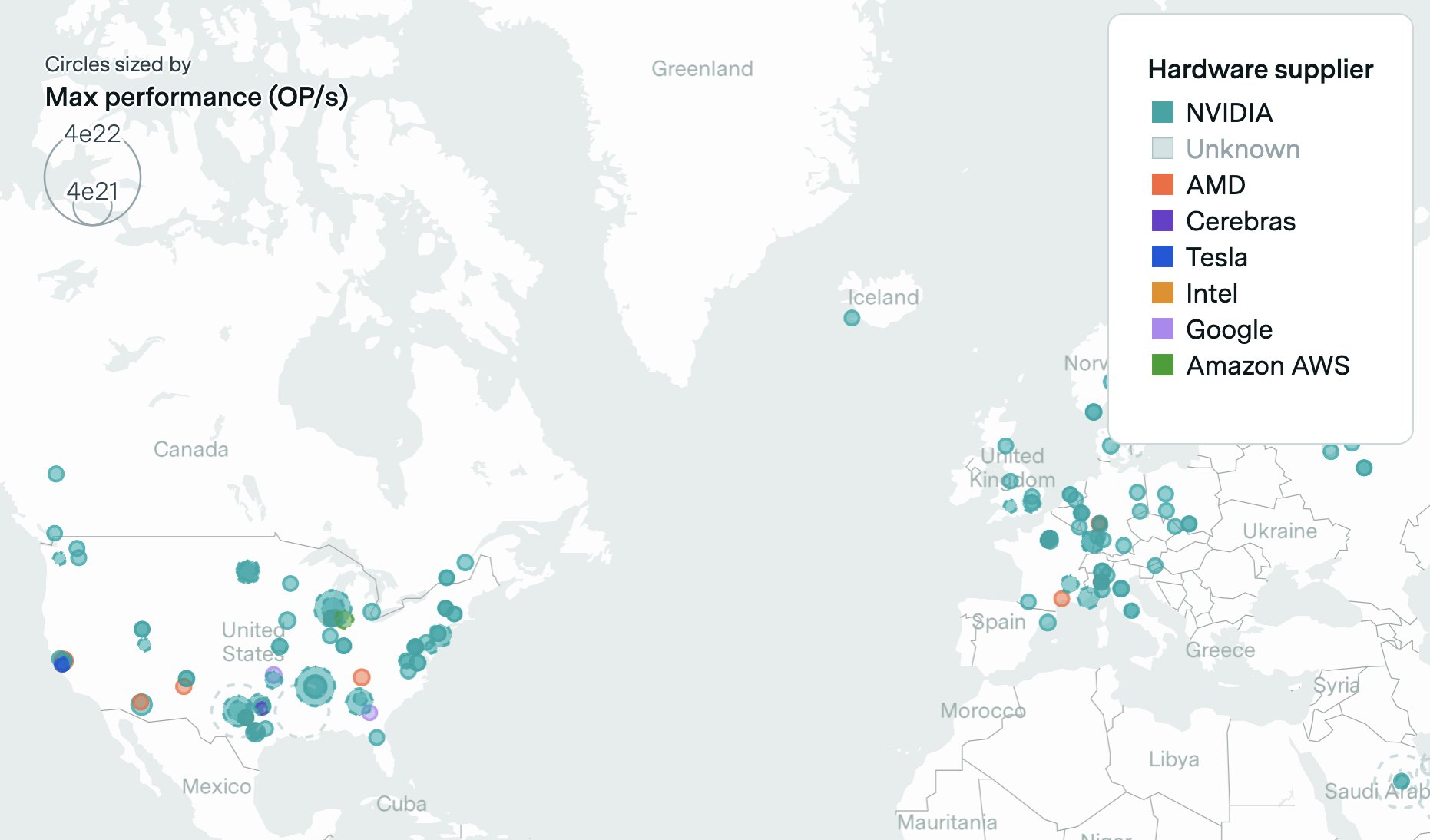
Players Park is strategically sited—embedded in one of the densest AI infrastructure corridors globally. The district connects directly to suppliers like NVIDIA, AMD, and AWS, positioning Players Park in Dolton, Illinois alongside elite global compute regions.
Why No One Else Is Doing This
What makes Players Park unusual is that it brings together pieces that are usually kept separate. Most AI infrastructure is built to serve computation, not the surrounding community. Data centers often operate as isolated assets, with little connection to the towns where they are located. At the same time, most small towns do not yet view AI labs or applied research as tools for economic development. In sports and performance, valuable data is often collected without giving meaningful ownership to the people who generate it. Players Park is designed to respond to these gaps by combining AI-ready infrastructure, real-world testing environments, and more locally grounded data systems within one district. The result is a model built to support applied research, broader economic participation, and long-term local productivity.
What It Takes to Move Players Park Forward
For Players Park to move forward, four things need to come together: the site must be ready and publicly supported, the infrastructure must be able to scale with confirmed utility service, the business model must be viable, and the project must be credible enough to attract long-term capital. Each of these steps reduces risk and brings Phase 1 closer: site activation, early development, and initial commercial progress within 12 to 18 months.
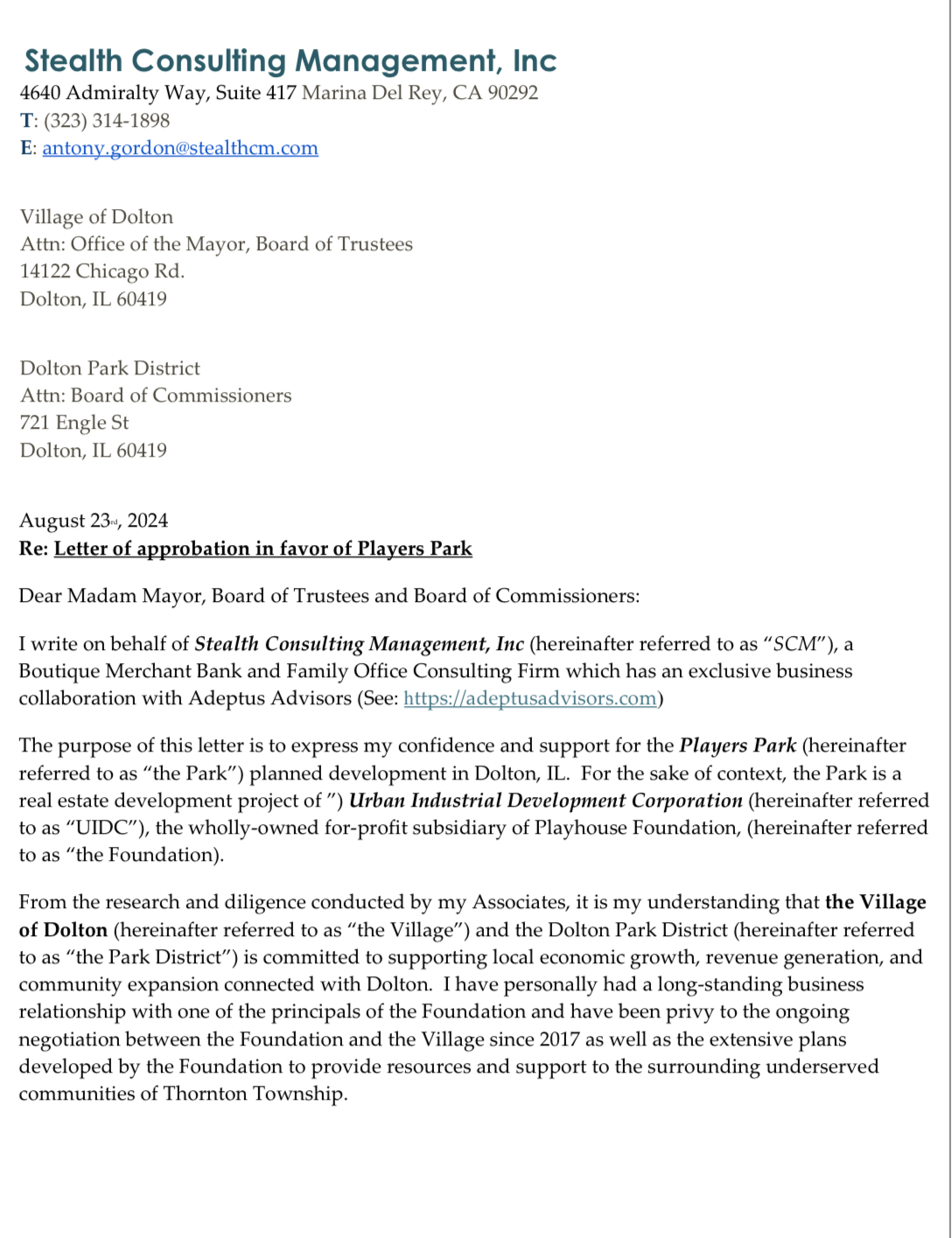
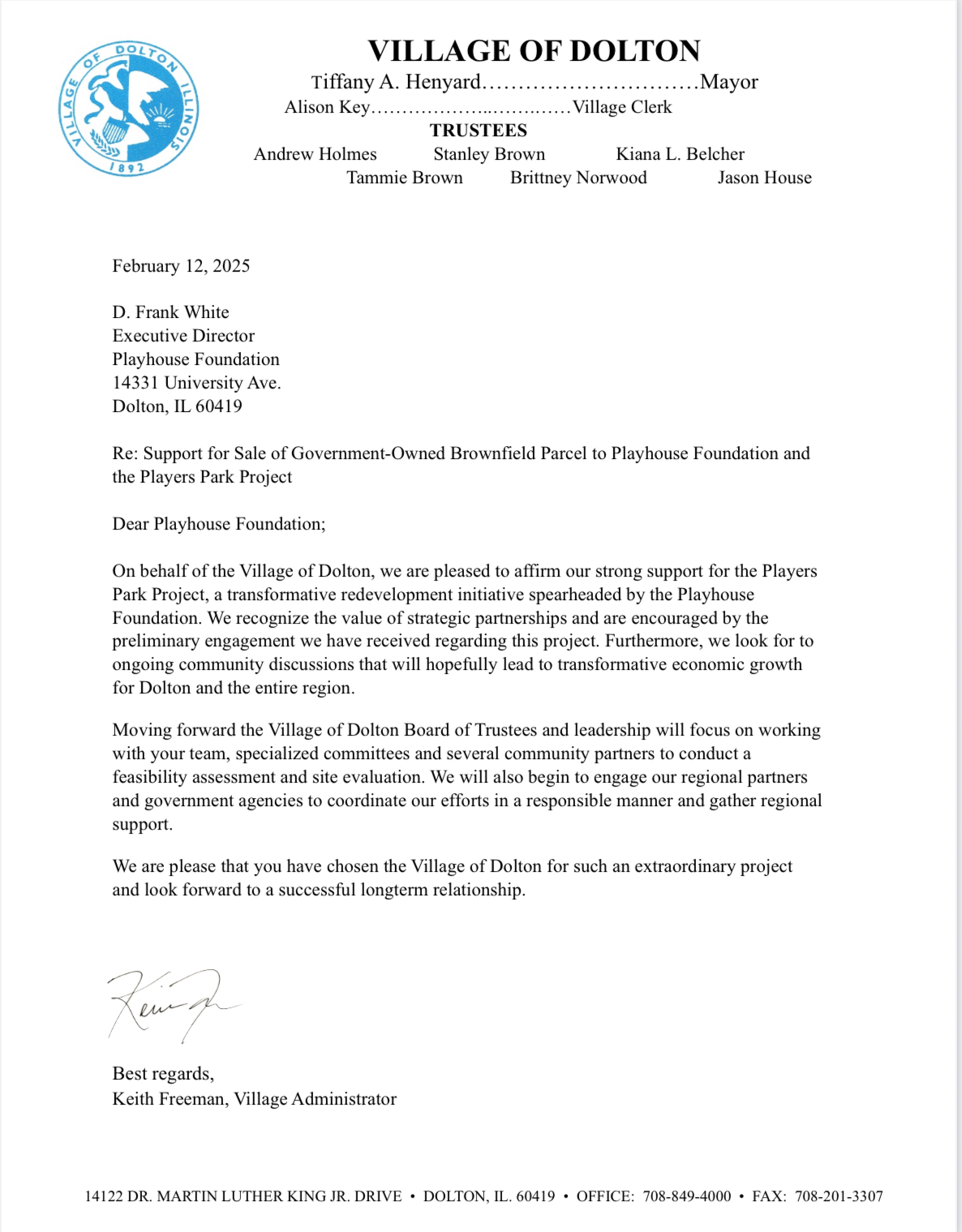
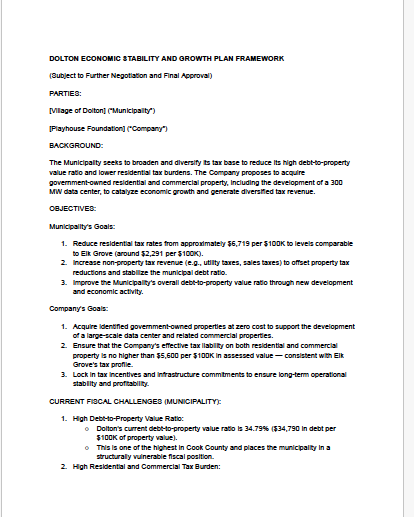
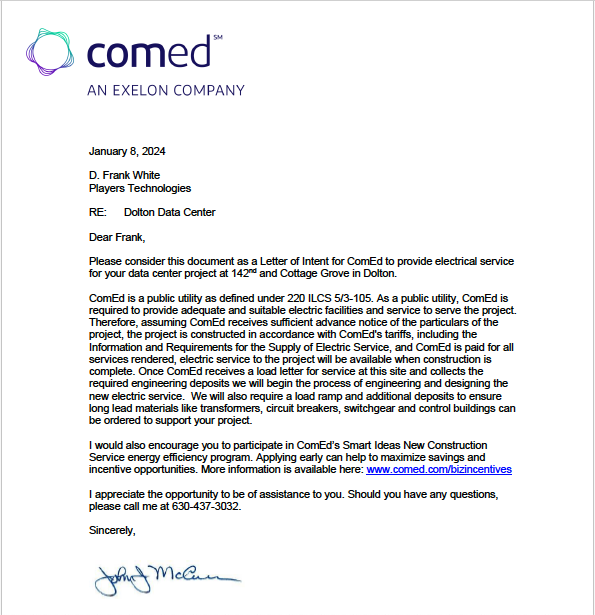
Much of that groundwork is already in place. Players Park Dolton has received a letter of support showing public alignment. A 300MW will-serve letter confirms power capacity. Players Technologies has contributed intellectual property. HKS, Inc. is developing the master plan, and the MLB Players Alliance has committed philanthropic funding. An institutional letter of approbation also supports the project’s pre-development readiness. The remaining step is to secure a finalized purchase agreement and preliminary permits so the project can bring in equity and catalytic grant funding, begin construction, and move into execution.
What Happens in Dolton Can Happen Elsewhere
At its core, Players Park is about showing that the next generation of American infrastructure does not have to bypass communities like Dolton. It can be built here, create value here, and help restore the economic foundation that allows communities to grow stronger over time. If Players Park succeeds, it will not only transform one site. It will offer a model for how overlooked places can become part of the country’s next era of productivity and possibility.
February 8, 2025 — Players Park Board Discussion
Mayor Pro Tem and current Mayor of Dolton, Jason House, leads a critical discussion on the future of Players Park.